
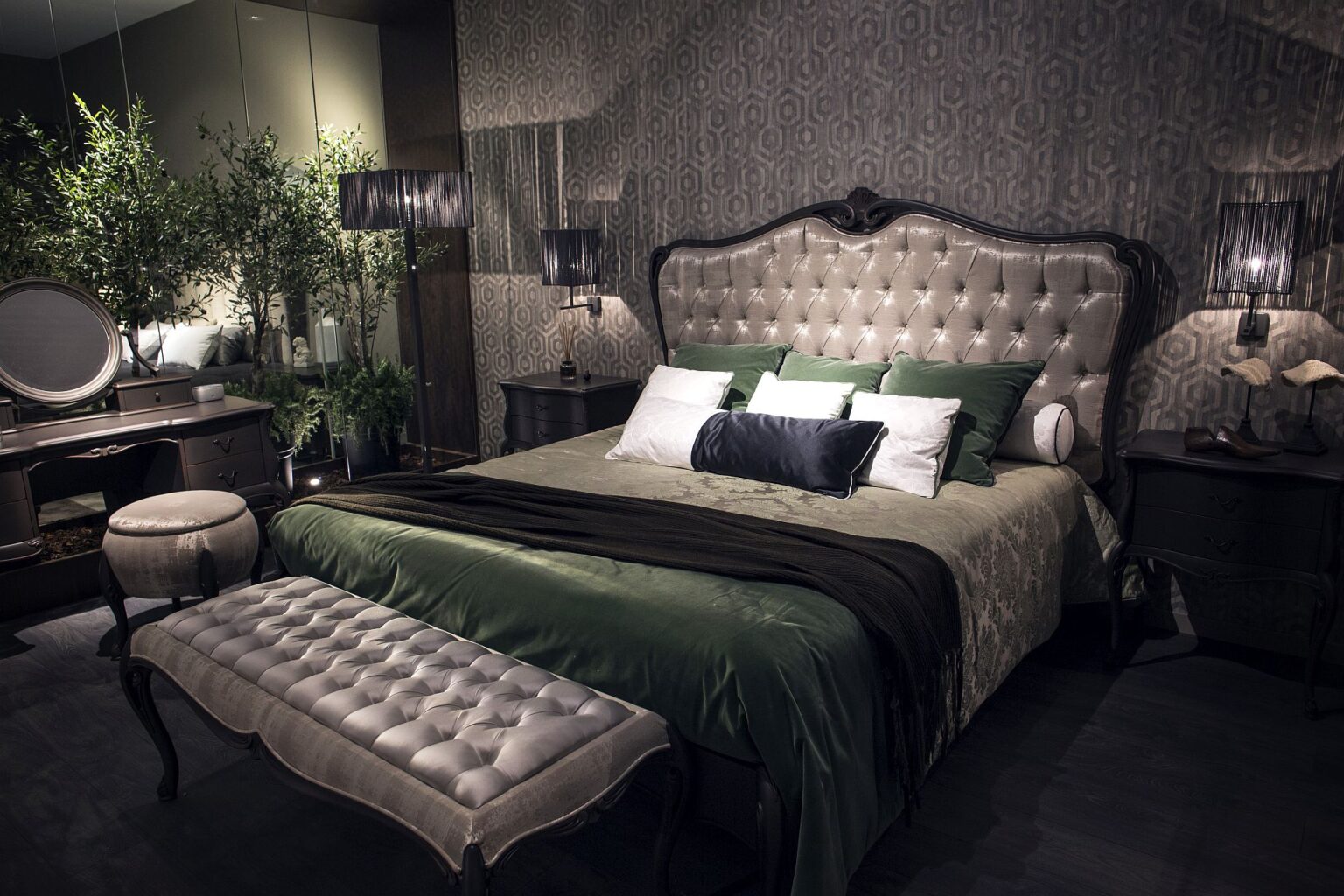
Floor lamps for bedroom spaces can improve comfort, visibility, and style without taking up valuable room on a nightstand or requiring permanent electrical work. The right lamp can brighten a dark corner, create a relaxing reading area, provide soft evening light, or serve as a decorative feature that completes the room.
Bedrooms rarely work well with one bright ceiling fixture alone. Overhead lighting may be useful while cleaning, dressing, or organizing the room, but it can feel harsh during the evening. Bedside lamps provide softer illumination, yet they may not reach a chair, desk, vanity, wardrobe, or empty corner.
A floor lamp solves many of these problems. It stands independently, can be moved when the furniture layout changes, and is available in designs for ambient lighting, reading, decoration, storage, and smart-home control.
However, not every floor lamp works equally well in a bedroom. Height, shade shape, brightness, color temperature, switch position, base size, stability, cord length, and overall design all affect how useful the lamp will be.
This guide explains everything you need to know about choosing, placing, styling, and safely using floor lamps for bedroom spaces.
Why Floor Lamps for Bedroom Spaces Are a Good Choice
Floor lamps offer a combination of flexibility and function that many permanent light fixtures cannot provide.
Unlike table lamps, they do not require a dresser, desk, or nightstand. This makes them particularly helpful in small bedrooms where surface space is limited. A slim lamp can fit beside a bed, chair, wardrobe, or dressing table without adding another piece of furniture.
Floor lamps are also easy to reposition. You can move a reading lamp from one side of the room to another, place a torchiere in a darker corner, or use an arc lamp to extend light over a chair or bench.
Common benefits include:
- Freeing space on nightstands and desks
- Adding soft ambient light
- Creating a reading or relaxation corner
- Improving lighting near wardrobes and dressers
- Brightening corners that ceiling fixtures do not reach
- Adding height and visual balance to the room
- Supporting a layered bedroom-lighting plan
- Allowing easy changes without rewiring
- Providing remote, app, or voice control when smart features are included
Floor lamps can also help renters improve bedroom lighting without installing sconces or replacing ceiling fixtures.
Main Types of Floor Lamps for Bedroom Use
The best lamp depends on the activity it needs to support. Some designs focus light on a book or desk, while others spread illumination across a wider area.
| Floor-lamp type | Best bedroom use | Main benefit |
| Reading lamp | Beside a chair or bed | Focused task lighting |
| Torchiere lamp | Dark corners and general lighting | Directs light upward |
| Arc lamp | Over a bed, chair, or bench | Extends light away from the base |
| Adjustable lamp | Reading, working, or sewing | Flexible height or direction |
| Tree lamp | Shared rooms or multiple areas | Several light sources |
| Shelf lamp | Small bedrooms | Combines lighting and storage |
| Tripod lamp | Decorative interiors | Strong visual presence |
| Slim floor lamp | Narrow spaces | Requires limited floor area |
| Smart LED lamp | Modern bedrooms | Remote and automated control |
| Globe lamp | Soft decorative lighting | Spreads light in several directions |
| Pharmacy lamp | Reading and desk work | Controlled downward beam |
| Statement lamp | Large or styled bedrooms | Functions as décor |
Reading Floor Lamps for Bedroom Corners
Reading lamps produce focused task light. They are ideal beside an armchair, chaise lounge, window seat, or the side of a bed.
A good reading lamp should direct light toward the book without shining into the reader’s eyes. Adjustable shades, swing arms, and flexible necks make it easier to position the beam.
Place the shade slightly behind or beside the reader so the light falls across the page. Right-handed readers often find light from the left more comfortable because it reduces shadows from the writing hand. Left-handed readers may prefer the lamp on the right.
A narrow task lamp may illuminate a book very well while leaving the rest of the area dark. Therefore, consider whether you only need focused reading light or also want the lamp to create a softer glow throughout the corner.
For a multipurpose reading nook, a lamp with a diffused shade or adjustable brightness may be more suitable.
Torchiere Floor Lamps for Bedroom Lighting

A torchiere lamp has an upward-facing shade or bowl. It sends light toward the ceiling, which then reflects the illumination around the room.
This indirect lighting can feel softer than a bare ceiling bulb. It is particularly useful in bedrooms with weak overhead lighting or dark corners.
Torchiere lamps are commonly used for ambient lighting rather than detailed tasks. They may not provide enough concentrated illumination for reading small text, so they often work best alongside a bedside or reading lamp.
A dimmable torchiere offers more flexibility. A brighter setting can help while dressing or cleaning, while a lower setting creates a calm atmosphere before bedtime.
The ceiling color also affects the result. Light-colored ceilings reflect more illumination, while dark ceilings absorb more light and may reduce the lamp’s effectiveness.
Arc Floor Lamps for Bedroom Seating and Beds
Arc lamps have long curved arms that extend outward from the base. This allows the lamp to remain beside furniture while positioning the shade above a chair, bench, or part of the bed.
They are useful when there is no room for a side table. An arc lamp can also become a strong decorative feature in a large bedroom.
However, these lamps require more careful measurement than straight floor lamps. The arm and shade may extend farther into the room than expected.
Before purchasing an arc lamp, check:
- Overall lamp height
- Horizontal reach
- Shade width
- Base size
- Clearance above furniture
- Distance from wardrobes and doors
- Distance from ceiling fans
- Space needed for walking around the lamp
A heavy, stable base is essential because the lamp’s weight extends away from the stem.
Adjustable Floor Lamps for Bedroom Activities
Adjustable lamps allow the user to change the direction, height, angle, or reach of the light.
They are suitable for bedrooms used for several activities, including:
- Reading
- Writing
- Studying
- Sewing
- Applying makeup
- Working on a laptop
- Crafting
- Relaxing in a chair
Bent-neck, gooseneck, and swing-arm models can direct light over the user’s shoulder while keeping the base out of the way.
Adjustable designs are also useful when furniture arrangements change. A lamp may work beside a chair now and beside a desk later.
Check the quality of the joints and adjustment mechanism. Weak joints may loosen over time and allow the shade or arm to drop.
Tree Floor Lamps for Shared Bedrooms
Tree lamps include two or more light sources attached to one base. The shades can often be directed toward different parts of the room.
They may work well in shared bedrooms, large bedrooms, or spaces with several activity zones. One light can point toward a bed, another toward a desk, and another toward a reading chair.
Some tree lamps allow each light to operate separately. This can save energy and prevent unnecessary brightness.
However, multi-head lamps may look visually busy in small bedrooms. Choose a simple design and make sure the base remains stable when the shades are adjusted.
Shelf Floor Lamps for Small Bedrooms
Shelf floor lamps combine a light fixture with one or more storage surfaces. They can hold books, glasses, a phone, decorative items, or small bedroom accessories.
This design may replace both a lamp and a small side table, making it useful in compact rooms.
Nevertheless, shelf lamps have limitations. Their surfaces are usually smaller than a full nightstand, and open shelving may appear cluttered if too many objects are added.
Before buying one, check:
- Shelf dimensions
- Maximum weight capacity
- Total height
- Stability
- Access to the switch
- Cable management
- Distance between the bulb and stored objects
Do not place heavy items on a shelf unless the manufacturer confirms that it can support them.
Slim Floor Lamps for Small Bedroom Spaces
Slim floor lamps have narrow stems and compact bases, making them useful beside beds, wardrobes, desks, or chairs.
However, a narrow stem does not always mean the entire lamp is small. Some slim models have wide shades or arms that extend into the room.
Measure the complete dimensions, including:
- Base diameter
- Shade width
- Arm extension
- Overall depth
- Distance from the wall
- Space required to operate the switch
A lamp with a small footprint and a narrow shade generally works best in a tight bedroom.
Smart Floor Lamps for Bedroom Convenience
Smart lamps can be controlled through a remote, mobile application, voice assistant, or automated schedule.
Common features include:
- Brightness control
- Warm-to-cool white light
- Colored RGB lighting
- Timers
- Sleep routines
- Preset scenes
- Mobile app control
- Voice control
- Music synchronization
- Automatic on-and-off schedules
These features can be particularly useful in a bedroom because the user can adjust or turn off the light without getting out of bed.
Some smart lamps include integrated LEDs, while others use replaceable smart bulbs. A standard floor lamp with a compatible smart bulb may offer many of the same features as a dedicated smart model.
Before using a smart bulb, confirm:
- Correct socket size
- Maximum supported wattage
- Shade clearance
- Dimmer compatibility
- Wi-Fi or Bluetooth requirements
- Compatibility with the preferred voice assistant
A lamp with a physical switch should usually remain switched on for app and voice controls to work consistently.
Choosing the Best Height for Floor Lamps for Bedroom Spaces
Many residential floor lamps are approximately 58 to 72 inches tall, but there is no single ideal height for every bedroom.
The best height depends on the lamp type, furniture, room size, and intended lighting effect.
A lamp around 58 to 61 inches may suit a compact room or bedside position. Models between approximately 61 and 67 inches often work well beside reading chairs. Taller lamps may provide broader ambient lighting, especially when they direct light upward.
When placing a lamp beside seating, the bottom of the shade should generally be positioned so the bulb is not directly visible at eye level.
For bedside use, the light source should reach the book or sleeping area without creating glare.
Always check more than the total height. Consider:
- Shade position
- Seat height
- Bed height
- Ceiling height
- Lamp-base width
- Horizontal reach
- Switch position
- Cord length
- Distance from nearby furniture
Where to Place Floor Lamps for Bedroom Lighting
Placement determines how useful and safe a floor lamp will be.
The lamp should support a specific activity while remaining outside normal walking routes.
Beside the Bed
A floor lamp can replace a table lamp when the nightstand is too small or unavailable.
A slim lamp with a pull chain, touch control, remote, or smart function works well because the light can be operated from bed.
Place the shade where it illuminates the sleeping or reading area without exposing the bulb directly to the eyes.
Keep the base away from drawers and make sure the cord does not cross the path between the bed and door.
Next to a Reading Chair
A chair and floor lamp can turn an unused corner into a comfortable reading area.
Position the lamp slightly behind or beside the chair. The shade should direct light toward the book rather than toward the reader’s face.
A small side table, footstool, and soft rug can help define the area, but the lamp should remain the main functional element.
In a Dark Corner
A torchiere, globe lamp, or fabric-shaded lamp can brighten a corner that overhead lighting does not reach.
Lighting a previously dark area may also make the room feel larger and more balanced.
A mirror, artwork, chair, or plant can help connect the lamp with the surrounding décor.
Near a Dresser or Wardrobe
A floor lamp near a dresser or wardrobe can improve visibility while selecting clothes or organizing personal items.
Choose a lamp that spreads light across the area rather than creating a narrow beam.
Avoid placing the lamp where it blocks wardrobe doors, drawers, or walking space.
Beside a Vanity
A floor lamp can provide supplementary vanity lighting, but it should not usually be the only source used for makeup or grooming.
A single lamp positioned above or behind the user may create shadows. Balanced lighting from both sides of the face is generally more effective.
Next to a Bedroom Desk
An adjustable floor lamp can support a small bedroom workspace when there is no room for a desk lamp.
Position the shade so the light reaches the work surface without reflecting directly on a computer screen.
The lamp should remain stable when the arm or head is moved.
Choosing the Right Color Temperature
Color temperature describes whether white light looks warm, neutral, or cool. It is measured in kelvins.
Warm light is commonly associated with relaxation, while cooler light can feel brighter and more alert.
Typical options include:
| Color temperature | Appearance | Best bedroom use |
| 2200K–2400K | Very warm, candle-like | Decorative evening lighting |
| 2700K | Warm white | Relaxing and bedtime |
| 3000K | Soft white | General bedroom lighting |
| 3500K–4000K | Neutral white | Dressing, desks, and wardrobes |
| 5000K and above | Cool daylight | Detailed tasks, usually not ideal at night |
For most bedrooms, 2700K or 3000K offers a comfortable balance.
A tunable white lamp can provide cooler light during the day and warmer light in the evening.
Understanding Brightness and Lumens
Lumens measure the amount of visible light produced by a bulb or lamp. Higher lumens generally mean brighter illumination.
The correct brightness depends on the purpose.
A small accent lamp may only need to create a soft glow. A reading lamp needs enough light to make text clear. A torchiere used as the main source of bedroom lighting may require higher output.
Instead of choosing brightness by wattage alone, check the lumen rating. Modern LED bulbs can produce strong light while using fewer watts than traditional incandescent bulbs.
Dimming is especially useful in a bedroom. It allows one lamp to provide brighter light for cleaning or dressing and softer illumination before sleep.
Choosing the Best Bulb for Bedroom Floor Lamps
LED bulbs are commonly suitable for floor lamps because they use less energy, last longer, and usually produce less heat than traditional incandescent bulbs.
Important bulb details include:
- Socket type
- Bulb shape
- Lumen output
- Color temperature
- Dimming compatibility
- Maximum wattage
- Color-rendering quality
- Smart functionality
- Enclosed-fixture compatibility
Never use a bulb that exceeds the lamp manufacturer’s maximum wattage.
A bulb with a high color-rendering index can help clothing, bedding, artwork, and wall colors appear more accurate.
How Lampshades Affect Bedroom Lighting
The shape and material of a shade influence how light spreads around the room.
A drum shade usually sends light upward and downward. A tapered or empire shade directs more illumination downward. A globe shade spreads light in several directions. An opaque metal shade creates a more focused beam.
Fabric shades soften light and can make a bedroom feel warmer. Clear glass produces stronger illumination but may create glare. Frosted glass spreads light more evenly.
Dark or heavily patterned shades may reduce brightness, even when the bulb has a high lumen output.
Choose the shade according to the lamp’s purpose:
- Fabric shade for soft ambient lighting
- Metal shade for reading or task light
- Frosted glass for diffused illumination
- Upward bowl for room-wide ambient light
- Adjustable shade for flexible direction
Matching Floor Lamps for Bedroom Décor
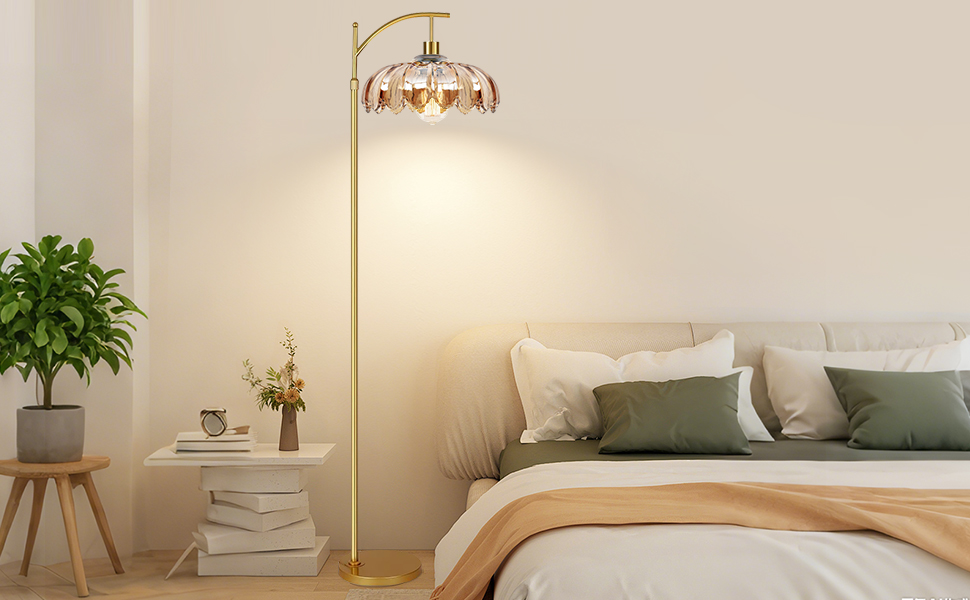
A floor lamp should complement the bedroom without needing to match every other fixture exactly.
The lamp can relate to the room through its finish, color, shape, material, or overall design style.
Modern bedrooms often suit black, white, chrome, brass, or sculptural lamps. Mid-century bedrooms may include wood, globe shades, tapered forms, and warm metal finishes.
Traditional rooms often work well with fabric shades, antique-style finishes, and decorative bases. Industrial interiors may suit dark metal, exposed hardware, and adjustable arms.
Bohemian bedrooms can include woven materials, pleated shades, warm wood, and organic shapes. Scandinavian rooms usually benefit from simple forms, pale wood, neutral fabrics, and soft white light.
Mixing different lamp shapes can make a room appear more natural. A small bedside lamp can work with a curved floor lamp when both share a similar finish or color.
Layering Floor Lamps With Other Bedroom Lighting
A well-lit bedroom usually combines three lighting layers.
Ambient lighting provides general illumination. Ceiling fixtures, torchieres, and wide-spreading floor lamps can serve this purpose.
Task lighting supports specific activities such as reading, dressing, or working. Reading lamps, desk lamps, and adjustable floor lamps are common examples.
Accent lighting highlights artwork, plants, architectural features, or decorative areas.
A floor lamp may provide one or two of these layers, but it does not need to perform every function alone.
For example, a bedroom could include:
- A ceiling light for general illumination
- Two bedside lamps for reading
- A floor lamp in a corner for atmosphere
- A desk lamp for work
- Small accent lights near artwork
Use similar finishes, shapes, or color tones to keep the arrangement visually connected.
Safety Tips for Floor Lamps for Bedroom Spaces
Safety is especially important in small bedrooms, children’s rooms, and areas with heavy foot traffic.
Choose a lamp with a stable base that does not wobble. The base should remain secure when the shade or arm is adjusted.
Keep the lamp away from:
- Curtains
- Bedding
- Clothing
- Upholstery
- Paper
- Flammable decorations
- Water sources
Use only bulbs approved for the fixture. LED bulbs are often a practical choice because they usually produce less heat.
Cords should run along walls or behind furniture. Do not stretch a cord across a doorway or walking path.
Avoid placing the lamp where it can easily be knocked over when someone gets out of bed.
For children’s bedrooms, look for:
- A wide and stable base
- Durable construction
- A protected bulb
- Secure shade attachment
- No exposed hot surfaces
- Safe cord placement
- Tip-resistant design
Always follow the manufacturer’s assembly and safety instructions.
Common Mistakes When Buying Floor Lamps for Bedroom Use
One common mistake is choosing a lamp based only on product photographs. Images may make the lamp appear smaller, taller, or more substantial than it actually is.
Measure the proposed location before ordering.
Another mistake is selecting the wrong light type. A narrow reading lamp may not provide enough ambient light, while a bright torchiere may not offer the focused beam required for reading.
Other common mistakes include:
- Ignoring shade width
- Forgetting to measure arm extension
- Choosing an unstable base
- Selecting the wrong color temperature
- Blocking drawers or wardrobe doors
- Placing the lamp in a walking path
- Using a switch that is difficult to reach
- Buying a lamp that is too dim
- Using a bulb with excessive wattage
- Ignoring cord length
- Choosing a lamp that creates glare
- Relying on one lamp for every bedroom activity
- Assuming a smart lamp works with every app or assistant
- Forgetting to check whether integrated LEDs can be replaced
How to Choose Floor Lamps for Bedroom Spaces
Use the following checklist before making a purchase:
- Decide whether you need ambient, task, or accent lighting.
- Choose the exact location for the lamp.
- Measure the available floor space.
- Measure the maximum shade width.
- Check the lamp’s overall height and reach.
- Confirm that doors and drawers can open freely.
- Choose an appropriate color temperature.
- Compare lumen output.
- Decide whether dimming is important.
- Check the switch position.
- Confirm the cord is long enough.
- Review bulb compatibility.
- Check whether the base is stable.
- Consider whether smart control is useful.
- Match the lamp to the room’s materials and style.
- Read assembly and warranty details.
- Review product feedback for recurring stability or quality issues.
A lamp should be selected by balancing function, dimensions, safety, and appearance rather than by price or style alone.
Are Expensive Floor Lamps for Bedroom Spaces Better?
An expensive floor lamp is not automatically better for every bedroom.
Premium products may include higher-quality materials, stronger construction, designer styling, advanced dimming, integrated LEDs, or more refined finishes.
However, an affordable lamp can still perform well when it has:
- A stable base
- Safe wiring
- Suitable brightness
- A practical switch
- Correct dimensions
- A well-designed shade
- Replaceable bulbs
- Clear assembly instructions
Focus on the features that matter for the intended space.
A decorative designer lamp may be worth the cost when it serves as a major visual feature. A simple reading lamp may not need premium materials if it is stable, comfortable to use, and produces the right light.
Floor Lamps for Bedroom Ideas by Room Size
In a small bedroom, choose a slim lamp with a compact base and narrow shade. Shelf lamps may also work when they replace a separate side table.
In a medium bedroom, a reading lamp, tripod lamp, or decorative drum-shade lamp can add both function and style.
In a large bedroom, consider an arc lamp, statement lamp, tall torchiere, or a pair of matching floor lamps.
For a shared bedroom, a tree lamp or adjustable multi-head design can direct light toward different areas.
For a guest bedroom, choose a simple lamp with an obvious switch and warm light. Guests should not need an application or complicated remote to operate the main lamp.
Frequently Asked Questions About Floor Lamps for Bedroom Spaces
The best type depends on the intended use. A reading lamp works beside a chair, a torchiere provides ambient light, an arc lamp extends over furniture, and a smart lamp offers remote control and adjustable settings.
Common locations include beside the bed, next to a reading chair, in a dark corner, near a dresser, beside a desk, or close to a wardrobe. The base and cord should remain outside walking paths.
Warm white light around 2700K is ideal for relaxation. Light around 3000K provides slightly clearer illumination while remaining comfortable. Tunable lamps allow the user to change the color temperature.
Many floor lamps are approximately 58 to 72 inches tall. The correct height depends on the furniture, shade position, ceiling height, and lighting purpose.
Yes. A slim floor lamp can replace a bedside table lamp when surface space is limited. Choose a lamp with a switch, remote, pull chain, or smart control that is easy to reach from bed.
Floor lamps are generally safe when they have stable bases, undamaged cords, correct bulbs, and enough clearance from curtains and bedding. Cords should not cross walking paths.
Smart floor lamps can be useful because they offer dimming, timers, color-temperature control, schedules, and operation from bed. A compatible smart bulb may provide similar features in a standard lamp.
Yes. Choose a lamp with a compact base, narrow shade, slim stem, or shelf design. Always check the full dimensions because a narrow base may still support a wide shade.
They do not need to be identical. Different lamps can work together when they share a similar finish, color, material, or design style.
The number depends on the room size and layout. Most bedrooms benefit from several light sources rather than one harsh ceiling fixture. A ceiling light, bedside lamps, and one floor lamp may provide a balanced arrangement.
Yes. LED bulbs are energy efficient, long-lasting, and available in many brightness levels and color temperatures. Make sure the bulb is compatible with the lamp and any dimmer.
Adjustable, swing-arm, gooseneck, and pharmacy-style lamps are useful for reading in bed because they direct light toward the page. The bulb should not remain directly visible at eye level.
Yes, provided there is enough space for the base, arm, and shade. Measure carefully and make sure the lamp does not interfere with doors, wardrobes, ceiling fans, or movement around the bed.
A well-placed floor lamp can brighten dark corners and visually open the room. Upward or diffused lighting can make walls and ceilings feel more spacious.
For bedside use, a pull chain, touch control, remote, or smart switch is usually convenient. Foot switches work well near chairs but may be harder to reach from bed.
Conclusion
Floor lamps for bedroom spaces can improve lighting, save surface space, and add a strong decorative element without requiring permanent installation.
The best lamp depends on how the bedroom is used. Reading lamps provide focused task lighting, torchieres create broader ambient light, arc lamps extend illumination over furniture, and smart lamps offer convenient control from bed.
Before purchasing, measure the full area, including the base, shade, and arm extension. Check the brightness, color temperature, bulb compatibility, switch position, cord length, and stability.
Warm light around 2700K or 3000K generally works well for relaxation, while brighter neutral light may suit wardrobes, desks, and dressing areas. Dimming provides the greatest flexibility.
A carefully selected floor lamp can make a bedroom feel warmer, calmer, more functional, and visually complete. Measure the space, identify the lighting purpose, and choose a design that supports both comfort and safety.