
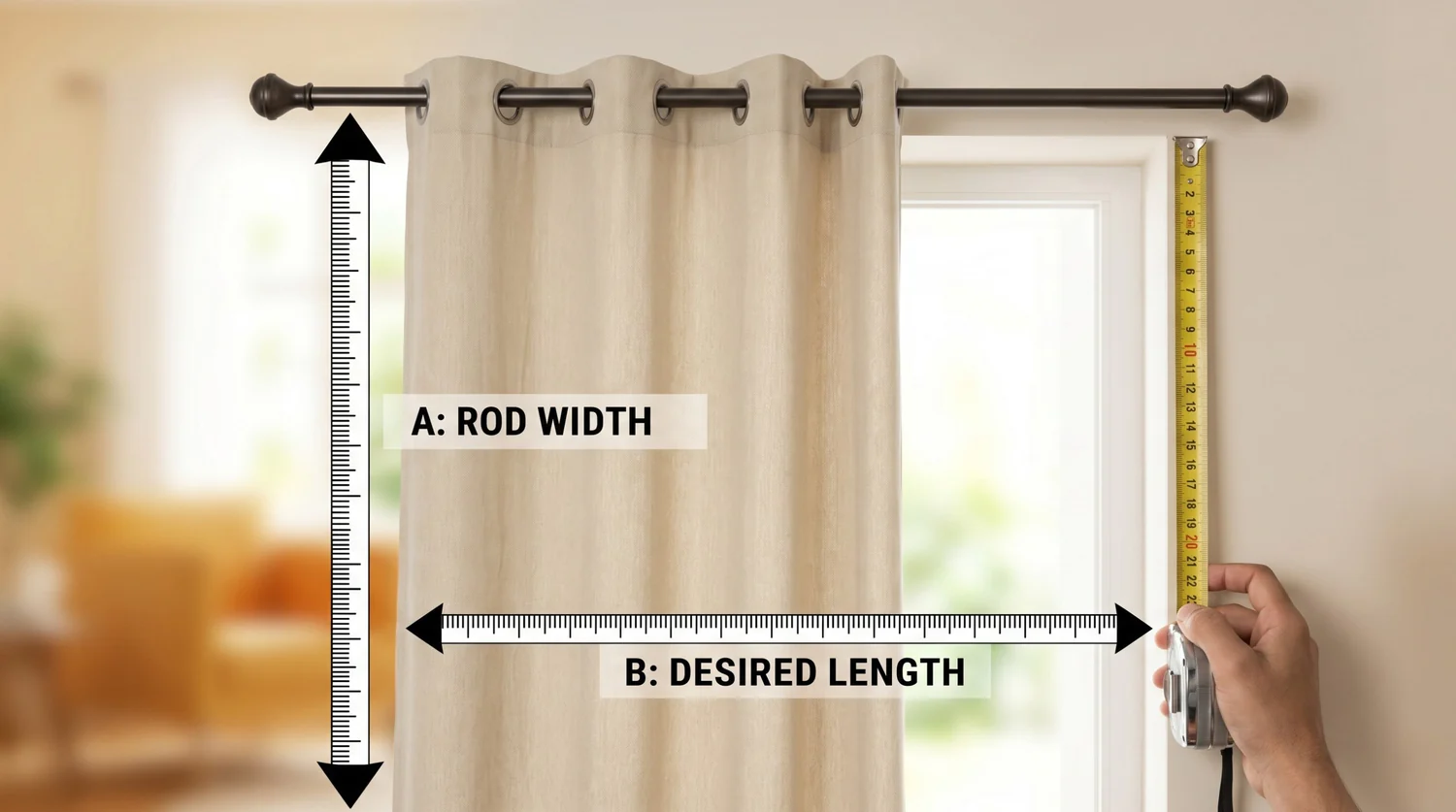
How to measure for curtains correctly starts with planning where the curtain rod will sit, how wide the panels should be, and where the fabric should end. Although measuring a window may seem simple, many people measure only the glass and then buy curtains that look too narrow, too short, or too bulky. Therefore, you should measure the full window frame, allow space for the rod, calculate enough fabric for attractive folds, and consider the curtain heading before placing an order. This complete guide explains how to measure curtain width, length, fullness, rod placement, pleated panels, grommets, rings, sliding doors, bay windows, and other common situations.
Why Correct Curtain Measurements Matter
Correct curtain measurements help the fabric frame the window instead of hiding it. In addition, properly sized panels can make a small window appear larger and a low ceiling look taller. Curtains that are too narrow may stretch flat when closed, while panels that are too short can make a room look unfinished. On the other hand, curtains that are excessively wide may create too much bulk beside the window. Accurate measurements also help you control privacy, sunlight, insulation, and ease of movement. Therefore, measuring carefully before buying can save money, prevent returns, and produce a more polished result.
What You Need Before Measuring for Curtains
Before you begin, gather a metal tape measure, pencil, paper, calculator, step ladder, and painter’s tape. A steel measuring tape usually stays straighter than a soft sewing tape, so it provides a more dependable result over wide openings. Moreover, painter’s tape lets you mark a possible rod position without drilling holes. Record each measurement immediately and label it clearly. For example, write “window width,” “planned rod width,” “left drop,” and “right drop” instead of writing several unexplained numbers. Finally, measure every dimension at least twice before buying ready-made or custom curtains.
Decide What Type of Curtains You Want
Before learning how to measure for curtains, decide what style you plan to hang. Lightweight curtain panels usually add softness, decoration, and light filtering. Drapes are often heavier and may include lining for privacy, insulation, or blackout performance. Sheers allow daylight into the room while reducing direct visibility. Meanwhile, layered treatments combine sheer panels with heavier curtains. Your choice affects the amount of fabric required because thin sheers usually look better with greater fullness, while thick velvet or lined blackout panels can become bulky when gathered too tightly.
Choose Between an Inside Mount and an Outside Mount
An inside mount places the curtain or tension rod within the window frame. This option can create a neat, fitted appearance, especially for café curtains and small kitchen windows. However, it requires precise measurements because the rod must fit inside the opening. An outside mount places the rod above and beyond the window frame. As a result, the window may appear larger, the curtains can block more light around the edges, and the open panels can sit away from the glass. Most full-length decorative curtains use an outside mount because it offers more flexibility.
Measure the Window Width Correctly
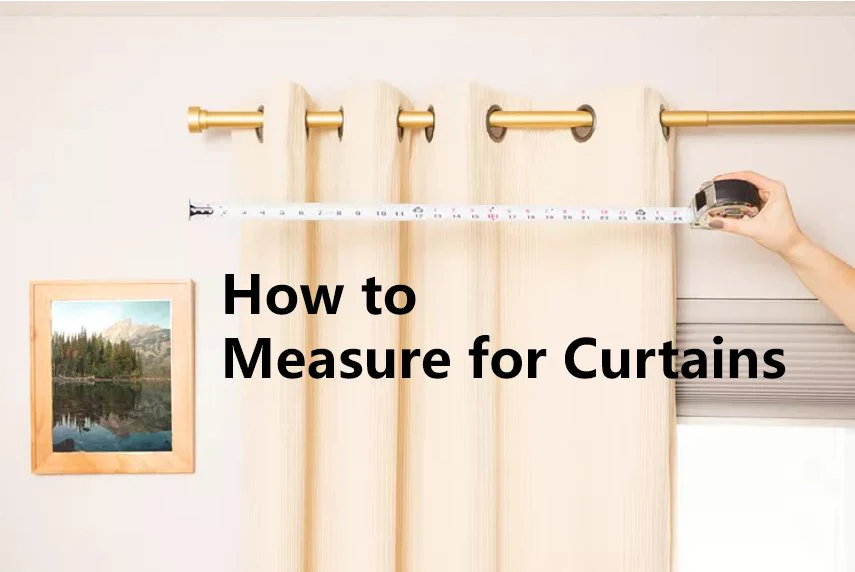
Start by measuring from the outside edge of the left window casing to the outside edge of the right casing. In other words, include the trim instead of measuring only the glass. If the window has no visible casing, measure the complete width of the frame. For several windows covered by one rod, measure from the outer edge of the first frame to the outer edge of the last frame. Record this as the basic window width. However, do not use this number alone to buy panels because you still need to plan the rod extension and curtain fullness.
How Wide Should the Curtain Rod Be?
A curtain rod should usually extend beyond both sides of the window. A practical starting point is about 3 to 6 inches on each side. Therefore, a 48-inch window may use a rod span of approximately 54 to 60 inches. Extending the rod allows the open curtains to move away from the glass, which lets more natural light enter and makes the window look wider. Nevertheless, thick panels may need more stack-back space. Stack-back refers to the wall space occupied by the gathered fabric when the curtains are open. Before choosing an extra-wide rod, check for nearby walls, cabinets, light switches, artwork, and furniture.
Curtain Rod Width Formula
You can calculate a basic rod span with this formula:
Window width + left extension + right extension = planned rod width
For example, suppose the window casing measures 50 inches. You want the rod to extend 5 inches on each side. Therefore:
50 + 5 + 5 = 60 inches
In this example, the usable rod span should be about 60 inches. However, decorative finials may add more width beyond the rod brackets. Consequently, check whether the rod size shown on the package includes the finials or only the adjustable rod section.
How High Should You Hang the Curtain Rod?
Rod height affects how tall the window and room appear. If the rod sits directly on top of the window trim, the window may look shorter. Therefore, place it several inches above the frame when possible. A balanced method is to position the rod about halfway to two-thirds of the distance between the top of the window and the ceiling or crown molding. In a room with a standard ceiling, you may place the rod closer to the ceiling to create height. However, in a room with very tall ceilings and a small window, placing the rod directly under the ceiling may look unbalanced. Mark the possible location with painter’s tape and view it from across the room before drilling.
Install the Rod Before or After Buying Curtains?
You should plan the rod position before measuring curtain length. However, it can be helpful to wait before permanently installing it. Ready-made curtains may vary slightly in finished length, and the heading may sit differently on the hardware than expected. Therefore, mark the planned rod position, calculate the required length, and buy the curtains. After the curtains arrive, place the rod temporarily or hold the panel at the planned height. You can then make small adjustments before drilling permanent holes.
What Is Curtain Fullness?
Curtain fullness describes how gathered or folded the fabric appears when the curtains are closed. Panels whose combined width equals only the rod width will usually look flat and stretched. Therefore, most curtains need more fabric than the space they cover. Standard fullness is about twice the coverage width. However, a minimal modern look may use 1.5 times the width, while sheers or luxurious curtains may use 2.5 to 3 times the width.
Curtain Fullness Guide
Use these general fullness levels:
| Desired curtain look | Fullness multiplier | Typical result |
| Minimal fullness | 1.5× | Clean, less gathered appearance |
| Standard fullness | 2× | Balanced folds for most rooms |
| Deluxe fullness | 2.5× | Richer and softer folds |
| Maximum fullness | 3× | Very full, dramatic appearance |
Two times fullness works well for many bedrooms, dining rooms, and living rooms. In contrast, 1.5 times may work when wall space is limited. Meanwhile, 2.5 or 3 times fullness can suit sheers and thin decorative fabrics. Heavy blackout curtains usually need less fullness because the thick fabric creates more bulk.
How to Calculate Curtain Width
Once you know the usable rod width, multiply it by the desired fullness. Use this formula:
Rod width × fullness multiplier = total curtain width
Suppose your planned rod width is 60 inches and you want standard fullness:
60 × 2 = 120 inches
Therefore, you need approximately 120 inches of total flat curtain width. If you plan to use two panels, divide the total by two:
120 ÷ 2 = 60 inches per panel
In this example, two panels measuring about 60 inches wide each would provide standard fullness.
Should Fullness Be Based on the Window or Rod Width?
Some guides calculate fullness from the window width, while others use the rod width. Using the window width provides a quick estimate. However, using the usable rod span gives a more accurate result because the curtains must cover the complete distance between the rod ends. Therefore, measure the window first, plan the rod extension, and then calculate fullness from the planned rod width. This method also accounts for the extra fabric needed to cover the space beyond the frame.
How to Read Curtain Sizes
Curtain dimensions normally appear as width by length. Therefore, a curtain listed as 52 by 96 inches measures 52 inches wide and 96 inches long. In most cases, the listed width applies to one panel rather than the complete pair. However, some packages contain one panel, while others contain two. Always read the product description carefully. If one package contains a single 52-inch panel, buying two gives you 104 inches of total width. Moreover, the stated width usually describes the panel when laid flat, not the area it should cover after gathering.
How Many Curtain Panels Do You Need?
To find the number of panels, divide the required total curtain width by the width of one panel. Then round up to the next whole panel.
Use this formula:
Required total curtain width ÷ individual panel width = number of panels
For example, a 72-inch rod at 2× fullness needs 144 inches of total fabric. If each panel measures 50 inches wide:
144 ÷ 50 = 2.88
Because you cannot buy 2.88 panels, round up to three. However, you may prefer four panels to keep an equal number on each side. Extra panels can also make wide windows and doors look fuller.
How to Measure Curtain Length
After deciding the rod position, measure vertically from the curtain’s actual hanging point to the desired endpoint. Measure on both the left and right sides because floors and ceilings may not be perfectly level. If the measurements differ, decide whether to use the shorter drop, adjust the rod, or have the hem altered. In addition, remember that the true hanging point changes according to the curtain heading. A curtain hung from rings starts lower than a rod-pocket panel, while grommet curtains include a small amount of fabric above the rod.
Common Curtain Length Styles
Curtains can end at the sill, below the sill, above the floor, directly on the floor, or in a decorative puddle. Therefore, choose the final style before calculating the length.
| Curtain length style | Finished position | Basic adjustment |
| Sill length | Slightly above the sill | End about ½ inch above sill |
| Apron length | Below the sill or trim | End about 1 inch below sill |
| Float or hover | Slightly above the floor | Subtract about ¼–½ inch |
| Kiss | Barely touches the floor | Use exact drop |
| Break | Bends softly at floor | Add about ½–1 inch |
| Minimal puddle | Small pool on floor | Add about 1–3 inches |
| Moderate puddle | Noticeable pool | Add about 3–6 inches |
| Full puddle | Dramatic formal pool | Add about 6–12 inches or more |
How to Measure for Sill-Length Curtains
For sill-length curtains, measure from the actual hanging point to about half an inch above the sill. This small gap helps the curtain move freely and prevents the fabric from rubbing against the surface. Sill-length curtains often work well in kitchens, bathrooms, laundry rooms, and windows above counters. However, make sure the fabric does not interfere with handles, faucets, radiators, or nearby appliances.
How to Measure for Apron-Length Curtains
Apron-length curtains extend below the sill but do not reach the floor. Measure from the planned hanging point to approximately one inch below the sill or apron trim. This length can look more deliberate than a curtain that ends randomly between the window and floor. Apron curtains may suit rooms where furniture, radiators, vents, or work surfaces prevent the use of floor-length panels.
How to Measure Curtains That Float Above the Floor
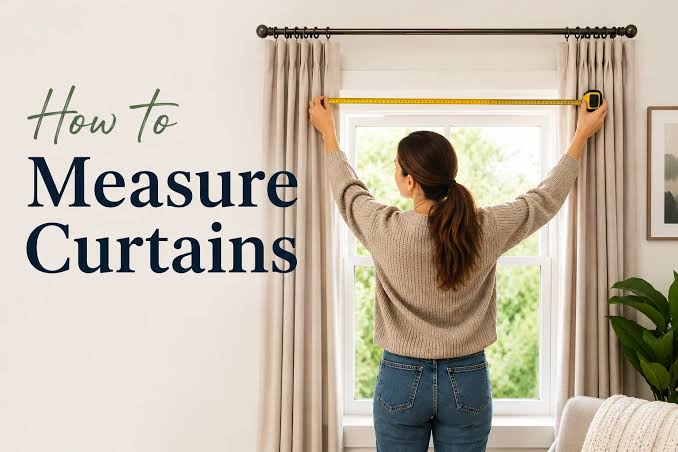
Floating or hovering curtains end slightly above the floor. Subtract approximately one-quarter to one-half inch from the rod-to-floor measurement. In busy rooms, a gap closer to three-quarters of an inch or one inch may make cleaning easier and reduce dragging. However, a large gap can make the curtains look too short. Therefore, use a small, intentional clearance and measure both sides carefully.
How to Measure Curtains That Kiss the Floor
Curtains that kiss the floor barely touch it without folding or pooling. Measure the exact distance from the true hanging point to the floor. Although this style creates a clean and tailored appearance, it requires very accurate measurements. Even a small difference in rod placement, floor level, ring size, or fabric relaxation can change the result. Therefore, install the hardware carefully and steam the curtains before making the final height adjustment.
How to Measure Curtains With a Break
A break occurs when the curtain touches the floor and bends slightly. To create this look, add approximately half an inch to one inch to the exact rod-to-floor measurement. This style offers more tolerance than a precise kiss because a small amount of extra fabric looks intentional. Moreover, it can create a softer, more relaxed appearance in bedrooms and living rooms.
How to Measure for Puddled Curtains
Puddled curtains include extra fabric that gathers on the floor. Add about 1 to 3 inches for a minimal puddle, 3 to 6 inches for a moderate puddle, or 6 to 12 inches for a dramatic formal effect. Nevertheless, puddled curtains collect dust more easily and can be difficult to vacuum around. They may also create a tripping risk for children, older adults, and pets. Therefore, use this style mainly for decorative curtains that remain open or closed most of the time.
Measure From the Correct Hanging Point
One of the most common curtain measurement mistakes involves starting from the wrong point. Do not automatically measure from the top of the window or the top of the fabric. Instead, identify where the curtain actually hangs from the rod, ring, hook, grommet, or track. The heading style can change the finished drop by an inch or more. Therefore, review the product drawing or manufacturer’s instructions before ordering.
How to Measure for Grommet Curtains
Grommet curtains contain metal or plastic rings built into the top of the panel. Measure from the top of the grommet opening to the desired endpoint. The fabric above the grommet will rise above the rod, so do not include it in the functional drop unless the seller defines the length differently. Also, check the grommet diameter to make sure it fits the curtain rod.
How to Measure for Rod-Pocket Curtains
Rod-pocket curtains slide directly onto the rod through a sewn channel. Some panels have fabric above the pocket, creating a decorative ruffle or heading. Therefore, measure from the position where the rod sits inside the pocket rather than from the top edge of the curtain. Product listings often state the full fabric length, so inspect the panel design carefully before calculating the finished drop.
How to Measure for Tab-Top Curtains
Tab-top curtains hang from fabric loops. Measure from the top of the tab to the desired endpoint. Because the tabs place the curtain below the rod, the finished fabric edge may sit several inches lower than a grommet or rod-pocket curtain on the same hardware. Therefore, include the full tab length when deciding rod height.
How to Measure for Curtains With Rings
Curtains hung from rings or clip rings sit below the rod. Measure from the underside of the ring, hook, or clip to the floor or desired endpoint. If the rod has not been installed, measure the complete ring drop and subtract it from the rod-to-floor distance. For example, if the distance from the top of the rod to the curtain attachment point is 1½ inches, subtract that amount when selecting the curtain length.
How to Measure Pinch-Pleat Curtains
Pinch-pleat curtains require a different width calculation because the fullness has already been sewn into the heading. Therefore, do not automatically multiply the finished pleated width by two. Instead, measure the usable rod or track width and check the seller’s ordering instructions. You may also need to include side returns and center overlap. Returns are the parts that wrap from the front of the rod toward the wall. Overlap is the area where two panels cross or meet at the center. Because manufacturers describe pleated widths differently, always use their finished-width chart.
How to Measure for Curtain Returns
Returns close the side gap between the curtain and the wall. They improve privacy and can reduce light leakage. To measure them, determine the distance from the front of the rod to the wall on each side. Add this amount to the panel coverage when ordering custom or pleated curtains. For example, if each side return measures 3 inches, you need 6 additional inches across the complete treatment.
How to Measure Center Overlap
Center overlap helps two curtain panels meet without leaving a visible gap. It is especially useful for bedroom curtains, blackout drapes, and traverse rods. The required overlap depends on the rod system and curtain construction. Some rods include an overlapping master carrier, while basic decorative rods do not. Therefore, check the hardware instructions and add the recommended amount to the finished coverage width.
How to Measure for Blackout Curtains
Blackout curtains need enough width and side coverage to reduce light gaps. Extend the rod beyond the window frame and consider mounting it several inches above the casing. In addition, use enough fullness so the panels do not pull flat when closed. Side returns, wraparound rods, overlapping center panels, and floor-length fabric can improve coverage. However, even blackout fabric may allow light around the edges if the rod is too narrow or too far from the wall.
How to Measure for Sheer Curtains
Sheer curtains often look better with more fullness because thin fabric can appear sparse. Therefore, consider using 2.5 to 3 times the rod width. For example, a 60-inch rod may need 150 to 180 inches of sheer fabric. However, check how much wall space the gathered panels will occupy when open. Layered window treatments may use sheers on an inner rod and heavier curtains on an outer rod.
How to Measure for Layered Curtains
For layered curtains, measure each rod separately because the rods may sit at different heights and project different distances from the wall. The inner layer often uses sheers, while the outer layer uses decorative or blackout panels. Therefore, calculate fullness independently for each layer. Also, make sure the outer rod extends far enough for the heavier panels to clear the inner fabric when opened.
How to Measure for Sliding Glass Doors
Sliding doors need enough curtain width to cover the full opening and enough stack-back space to keep the doorway clear. Measure the complete rod span rather than only the glass. Next, multiply by the desired fullness. For example, a 100-inch rod needs about 200 inches of fabric at 2× fullness. If each panel measures 50 inches wide, four panels provide the required total. In addition, decide whether the curtains will open from the center, stack on one side, or move in the same direction as the door.
How to Measure for French Doors
French doors may use one rod across both doors or separate rods on each door. Measure the complete outside width of the frames if using one treatment. However, check that the curtain does not block handles, hinges, or the opening path. Door-mounted curtain rods may require fabric that remains close to the glass. In contrast, wall-mounted curtains need enough space to clear the doors when they swing open.
How to Measure for Bay Windows
Bay windows require measurements for each individual section. First, measure the width of every window or wall segment. Then determine whether you will use one flexible bay-window rod, several connected rods, or separate rods. Because angled corners can reduce usable space, account for brackets and finials. Moreover, measure each drop separately because the floor or sill height may vary across the bay.
How to Measure Corner Windows
Corner windows may use two rods that meet at an angle or a special corner connector. Measure each wall section independently. Then check whether the curtain panels will overlap at the corner or stop before it. Full curtains can become crowded where the rods meet, so consider slightly lower fullness or carefully planned panel placement.
How to Measure Extra-Wide Windows
For extra-wide windows, calculate the complete rod span and multiply it by the chosen fullness. You may need three, four, or more panels. Always round up rather than down. In addition, wide rods often need center support brackets. These brackets can prevent curtain rings from moving across the full rod unless the rod uses a bypass system. Therefore, decide how the curtains will open before choosing the hardware.
How to Measure Café Curtains
Café curtains usually cover the lower part of a window while leaving the upper section open. First, decide where the rod will sit, often near the center of the window. Measure the inside frame width for a tension rod or the outside width for a mounted rod. Next, measure from the rod to the sill or desired endpoint. Use enough fullness for gentle gathers, usually around 1.5 to 2 times the rod width.
How to Measure Curtains Around a Radiator
Curtains should not rest directly on hot radiators or block heating airflow. Therefore, sill-length or apron-length curtains may work better in these areas. Measure to a point safely above the radiator. Alternatively, use floor-length decorative panels that stay open and install a shorter blind or shade for privacy. Always follow the heating system manufacturer’s clearance guidance.
How to Measure Curtains Near Baseboard Heaters
Electric baseboard heaters require clear space around them. Therefore, floor-length curtains may not be appropriate. Measure to a safe endpoint above the heater or choose a shorter curtain style. Do not let fabric rest on or directly in front of the heating unit. Safety should take priority over the preferred decorative length.
Common Ready-Made Curtain Lengths
Ready-made curtain panels often come in lengths such as 63, 84, 95 or 96, 108, and 120 inches. However, sizes differ by brand. An 84-inch panel may reach the floor when the rod sits near the window frame, while 96-inch panels allow a higher installation. Longer panels suit tall ceilings or puddled styles. When your measurement falls between two sizes, choose the longer option and hem it. A curtain that is too short is usually harder to correct.
Should You Wash Curtains Before Hanging Them?
Check the care label before installation. If the curtains are machine washable, washing them before final rod placement can reveal any shrinkage. However, some lined, pleated, velvet, or delicate curtains require dry cleaning or spot cleaning. Therefore, never wash them without checking the instructions. After washing or unpacking, steam or press the fabric because wrinkles can affect how the panels hang and may make them appear shorter.
Steam Curtains Before Final Rod Adjustment
Steaming removes packaging creases and relaxes the fabric. As a result, the panels may hang slightly longer after steaming. Therefore, do not make a final rod-height decision while the curtains remain heavily wrinkled. Hang the panels, steam them carefully, allow them to settle, and then check the floor clearance.
Complete Curtain Measurement Example
Suppose your window measures 48 inches from outside trim to outside trim. You plan to extend the rod 5 inches on each side:
48 + 5 + 5 = 58 inches of rod width
Next, you want standard 2× fullness:
58 × 2 = 116 inches of total curtain width
If each panel measures 60 inches wide, two panels provide:
60 × 2 = 120 inches
Therefore, two panels offer enough width. Now suppose the distance from the planned hanging point to the floor is 96 inches. You want the panels to float half an inch above the floor:
96 − 0.5 = 95.5 inches
A 96-inch curtain may work after a small rod adjustment or hem. However, you must also account for rings, grommets, tabs, or the rod pocket before choosing the final size.
Common Mistakes When Measuring for Curtains
A common mistake is measuring only the glass rather than the complete frame. Another is buying panels whose combined width equals the window width. People also forget to plan rod extension, curtain fullness, returns, center overlap, and hardware drop. In addition, many shoppers assume a package contains two panels when it contains only one. Other problems include measuring from the window instead of the actual hanging point, ignoring uneven floors, choosing a puddled style for a busy doorway, and permanently installing the rod before checking the curtain’s real length.
Curtain Measurement Checklist
Before buying curtains, confirm the following details:
- Measure the full window casing, not only the glass.
- Decide between an inside and outside mount.
- Choose the rod height.
- Add the desired rod extension on both sides.
- Measure the usable rod span.
- Select the curtain fullness.
- Calculate the complete fabric width.
- Check whether panels are sold individually or in pairs.
- Choose the finished curtain length.
- Measure from the true hanging point.
- Adjust for rings, tabs, grommets, hooks, or pockets.
- Measure both sides of the window.
- Check for radiators, handles, furniture, and doors.
- Review the manufacturer’s measurement instructions.
- Repeat all measurements before ordering.
Frequently Asked Questions About How to Measure for Curtains
Measure the full window width, including the casing. Then decide how far the rod will extend beyond each side. Calculate the curtain width from the usable rod span and desired fullness. Finally, measure from the actual hanging point to the sill, floor, or other chosen endpoint.
For most installations, the total flat curtain width should be about twice the usable rod or window width. Use 1.5× for a minimal appearance, 2× for standard fullness, and 2.5–3× for a richer look.
A useful starting point is approximately 3 to 6 inches beyond each side of the window frame. However, thick panels may need more room for stack-back.
Measure the window first to plan the rod. After deciding the rod extension, use the usable rod span for the final fullness calculation.
At 2× fullness, a 48-inch coverage width needs about 96 inches of total fabric. However, if the rod extends to 58 inches, you need about 116 inches of fabric for 2× fullness.
Usually, the listed width refers to one panel. However, some sets include two panels. Therefore, always check the package quantity and product description.
Divide the required total fabric width by the width of one panel, and then round up. For balanced window treatments, you may also round up to an even number.
Curtains may float about ¼–½ inch above the floor, barely kiss it, break softly with ½–1 inch of extra fabric, or puddle with several extra inches. The best choice depends on appearance and practicality.
For a floating style, leave approximately ¼–½ inch of clearance. Up to 1 inch may work in busy rooms or where the floor is uneven.
Slightly long curtains are usually better because you can hem them or raise the rod. Curtains that are too short are more difficult to fix.
Measure curtain length from the actual hanging point on the rod, ring, grommet, hook, tab, or track. The top of the window matters only when planning the rod position.
Measure from the top of the grommet opening to the desired endpoint. Remember that a small section of fabric will extend above the rod.
Measure from the underside of the ring, clip, or hook to the desired endpoint. Include the complete ring drop in your calculation.
Usually not. Pleated curtains already have fullness sewn into the heading. Follow the seller’s finished-width instructions and include any required overlap and returns.
Stack-back is the wall space occupied by the curtains when they are fully open. Thick or highly gathered curtains need more stack-back than thin panels.
A return is the section of curtain that wraps from the front of the rod toward the wall. It can reduce light gaps and create a more finished side view.
Overlap is the central area where two curtain panels cross or meet. It helps prevent gaps when the curtains are closed.
Common ready-made lengths include 63, 84, 95 or 96, 108, and 120 inches. However, exact sizes vary by manufacturer.
Extend the rod beyond the window, mount it above the frame, use enough fullness, and consider side returns or a wraparound rod. These choices help reduce light entering around the edges.
Measure the full rod span, multiply it by the desired fullness, and make sure the open curtains can stack away from the doorway. You may need four or more panels for a wide opening.
Wash them first only when the care label allows it. Otherwise, steam the curtains and let them settle before making the final rod-height adjustment.
Yes. Even windows that appear identical can differ slightly. Measure the width and length of every opening, especially when ordering custom curtains.
Conclusion
Learning how to measure for curtains correctly helps you avoid panels that look flat, short, crowded, or poorly placed. First, measure the complete window frame and decide how far the rod should extend. Next, calculate curtain fullness from the usable rod width, with 2× fullness working well for most rooms. Then measure the vertical drop from the curtain’s real hanging point and choose whether the panels will finish at the sill, float above the floor, kiss it, break gently, or puddle. Finally, account for the heading style, hardware, overlap, returns, and product dimensions. Careful planning will help your curtains frame the window beautifully and function properly every day.