
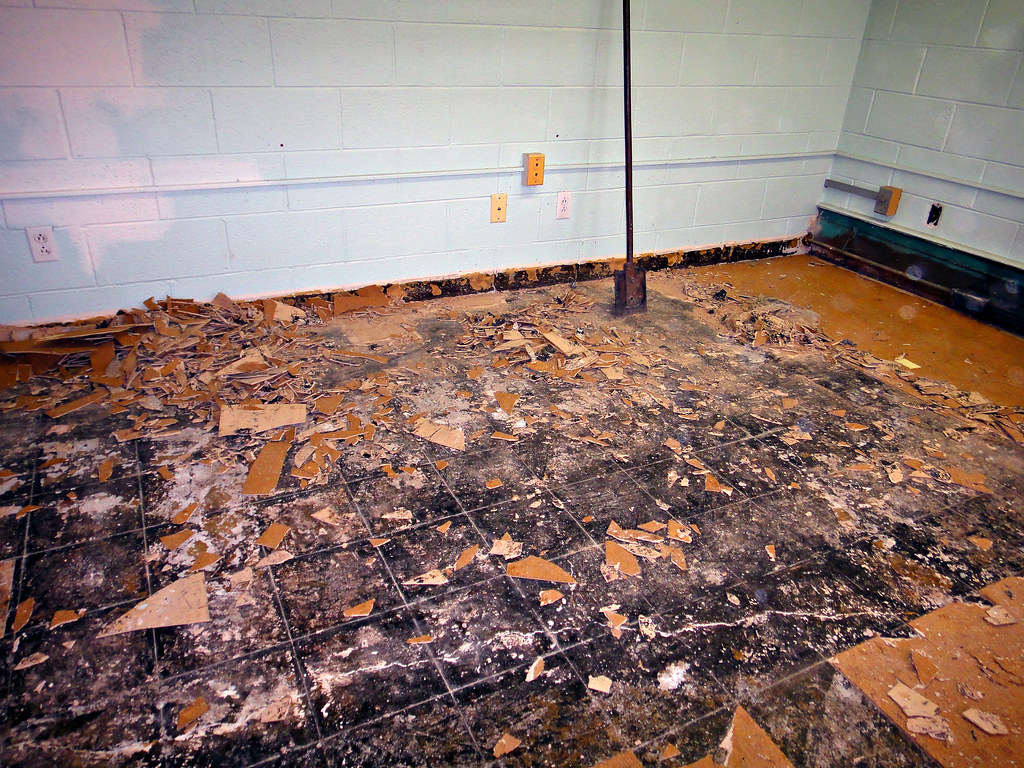
Asbestos floor tile may still exist beneath carpet, laminate, vinyl planks, or newer layers of flooring in older buildings. These tiles often look similar to ordinary vinyl or thermoplastic flooring, which makes visual identification unreliable.
Colour, pattern, size, brittleness, and building age can provide clues. However, none of these features can prove that a floor contains asbestos. Only laboratory analysis of a representative sample can confirm the presence or absence of asbestos fibres.
The adhesive beneath the tiles also matters. Black mastic, bitumen-based adhesive, or other old flooring glues may contain asbestos even when the tile itself does not. Therefore, tiles and adhesive may need to be assessed separately before renovation begins.
The safest response is simple: do not sand, grind, scrape, drill, break, or pull up suspicious flooring until a competent person has assessed it.
Asbestos Floor Tile at a Glance
| Question | Practical answer |
| Can you identify asbestos by sight? | No. Appearance can only raise suspicion. |
| Are all old floor tiles dangerous? | No, but suspect materials should remain undisturbed until assessed. |
| Can black floor adhesive contain asbestos? | Yes. Mastic or bitumen adhesive may contain asbestos separately from the tile. |
| Are intact tiles lower risk? | Generally, yes. Bonded, undamaged tiles release fewer fibres than broken or heavily disturbed materials. |
| Should you break a tile to inspect it? | No. Breaking a suspect tile is not a safe identification method. |
| Is laboratory testing necessary? | Testing is the only reliable way to confirm asbestos content. |
| Can asbestos tile remain in place? | Sometimes. Intact material may be managed, sealed, or covered, depending on its condition and local rules. |
| Can homeowners remove it themselves? | Rules vary by country and region. Professional assessment is usually the safer option. |
What Is Asbestos Floor Tile?
Asbestos floor tile is a resilient flooring product that contains asbestos fibres. Manufacturers historically added asbestos to some flooring materials because it offered strength, heat resistance, durability, and dimensional stability.
Asbestos may occur in several flooring components, including:
- Vinyl-asbestos floor tiles
- Thermoplastic tiles
- Asphalt-based tiles
- Sheet flooring backing
- Paper or felt backing
- Flooring adhesive
- Black mastic or bitumen
- Levelling or patching compounds
Older tiles are sometimes called Marley tiles, thermoplastic tiles, vinyl-asbestos tiles, or simply ACM tiles, meaning asbestos-containing material. However, trade names and informal descriptions do not confirm the material’s composition.
Not every old tile contains asbestos. Likewise, newer-looking flooring may conceal asbestos tiles or adhesive underneath.
What Does Asbestos Floor Tile Look Like?
There is no single appearance that identifies asbestos floor tile.
Suspect tiles may be:
- Dark, light, plain, speckled, or patterned
- Smooth or slightly textured
- Flexible, rigid, or brittle
- Installed in square or rectangular formats
- Hidden under carpet, wood, laminate, or newer vinyl
- Attached with yellow, brown, grey, or black adhesive
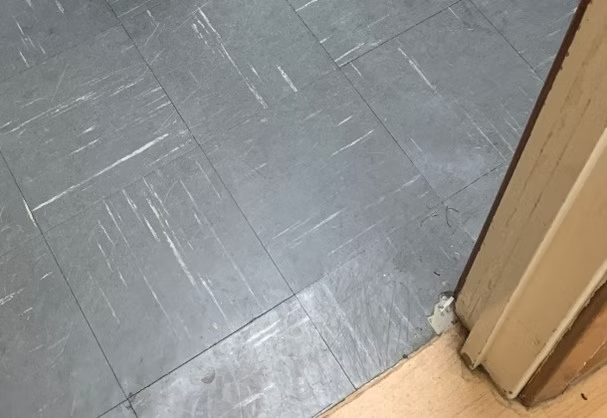
Some guides mention historically common square dimensions, including 9-inch, 12-inch, or 18-inch tiles. These sizes may justify further investigation, but they are not proof. Many asbestos-free tiles use the same dimensions.
Colour is equally unreliable. Asbestos-containing tiles appeared in a wide range of colours and patterns, while non-asbestos flooring may look almost identical.
Why photographs cannot confirm asbestos
Asbestos fibres are microscopic. They are mixed into the body, backing, or adhesive of a product and usually cannot be seen with the naked eye.
A photograph may help a surveyor understand the flooring type, condition, installation method, and surrounding area. However, even an experienced professional cannot confirm asbestos from an image alone.
Laboratory analysis remains necessary.
Where Is Asbestos Floor Tile Commonly Found?
Suspect flooring may occur anywhere durable, easy-to-clean surfaces were historically required. Common locations include:
- Kitchens
- Bathrooms
- Hallways
- Entrance areas
- Basements
- Utility rooms
- Schools
- Hospitals
- Offices
- Apartment buildings
- Corridors
- Workshops
- Commercial buildings
Tiles may also remain hidden beneath later renovations. For example, a room may contain carpet over old tile, laminate over vinyl, or several layers of resilient flooring.
The presence of newer flooring does not prove that older materials were removed.
Can the Adhesive Contain Asbestos?
Yes. The adhesive beneath old flooring can contain asbestos independently of the tile.
Black adhesive is commonly called:
- Black mastic
- Bitumen adhesive
- Asphaltic adhesive
- Cutback adhesive
However, colour alone does not establish whether an adhesive contains asbestos. Some black mastics are asbestos-free, while adhesives in other colours may still require investigation.
Testing only the tile may not provide a complete answer. A competent surveyor or laboratory should decide whether the tile, backing, adhesive, underlay, or levelling compound requires separate analysis.
This distinction becomes especially important when workers plan to scrape, grind, sand, or mechanically remove adhesive. Those methods can create far more dust than carefully lifting intact tiles.
Is Asbestos Floor Tile Dangerous?
Asbestos floor tiles are usually described as bonded or non-friable materials. The fibres sit inside a solid matrix, so intact tiles generally release fewer fibres than soft, loose, or crumbling asbestos insulation.
However, “lower risk” does not mean “no risk.”
The likelihood of fibre release rises when flooring is:
- Broken
- Crumbling
- Sanded
- Ground
- Drilled
- Sawed
- Aggressively scraped
- Removed with power tools
- Damaged by repeated traffic
- Pulled up with attached carpet
- Reduced to small fragments
The most important asbestos exposure route during building work is inhalation of airborne fibres. Therefore, any method that produces dust or breaks the material into small pieces requires careful control.
An intact floor that remains firmly attached and undisturbed may often present a relatively low immediate risk. Nevertheless, it must still be identified, recorded, monitored, and considered before future work.
How to Confirm Asbestos Floor Tile
Laboratory testing provides the only reliable confirmation.
A qualified asbestos surveyor can:
- Review the building’s age and renovation history.
- Inspect the flooring and surrounding materials.
- Decide which layers require sampling.
- Select a representative sampling location.
- Control dust and contamination during sampling.
- Submit the material to an appropriately accredited laboratory.
- Interpret the result in the context of the planned work.
Never break a suspect tile merely to see what is inside. Wearing gloves or a dust mask does not turn uncontrolled breakage into a safe identification method.
Should you use a home asbestos test kit?
A test kit normally does not analyse the sample inside the home. Instead, the user collects material and sends it to a laboratory.
Although kits may appear simple, the greatest risk often comes from collecting the sample. A poor sampling method can damage the tile, disturb adhesive, spread debris, or contaminate nearby surfaces.
Professional sampling is especially appropriate when:
- The floor is already damaged
- Several flooring layers are present
- Black mastic may be involved
- The building is occupied
- Children or vulnerable people use the area
- Renovation will disturb a large surface
- The result will affect a major project
- Local rules require a qualified surveyor
The laboratory should have recognised accreditation for the relevant asbestos-analysis method. Accreditation must cover the actual service performed; a company logo or general certification claim may not be enough.
What to Do When You Discover Suspect Flooring
When old flooring appears during renovation, stop before removing more material.
1. Stop disturbing the floor
Do not sand, scrape, drill, sweep, grind, or continue pulling up tiles.
2. Restrict access
Keep people and pets away from the area, particularly when tiles have broken or loose debris is present.
3. Avoid dry cleaning
Do not use an ordinary household vacuum cleaner. It may spread fine fibres through the exhaust and contaminate the machine.
4. Document the condition
Take photographs from a safe distance and note:
- Where the flooring was found
- Which layers were present
- Whether tiles broke
- Whether adhesive was exposed
- Whether dust or debris has spread
- What work had already taken place
5. Arrange an assessment
Contact a qualified asbestos professional, building surveyor, environmental consultant, or accredited laboratory, depending on local practice.
6. Wait for a work plan
Testing, removal, encapsulation, covering, cleaning, and waste handling should form part of a planned process rather than an improvised response.
Can Asbestos Floor Tile Be Left in Place?
In many situations, intact asbestos-containing flooring can remain in place under an asbestos-management plan.
Management may include:
- Regular condition checks
- Warning labels or building records
- Restricting intrusive work
- Sealing damaged edges
- Applying an appropriate encapsulation system
- Installing a compatible overlay
- Informing future contractors and owners
The UK Health and Safety Executive generally advises that asbestos-containing materials in good condition may often remain undisturbed and monitored.
However, covering a floor also creates a concealed hazard. Future workers may drill, sand, or remove the new flooring without knowing what lies underneath. Building records must therefore clearly identify the location of the asbestos.
Some organisations adopt stricter internal policies. The University of Florida, for example, generally requires asbestos-containing flooring and adhesive to be removed when the affected floor undergoes renovation. This approach aims to prevent future cost, uncertainty, and repeated disturbance.
That policy applies to University of Florida facilities. It does not mean that every homeowner or building owner must remove intact asbestos flooring.
Covering Versus Removing Asbestos Floor Tile
The correct choice depends on condition, future plans, local law, occupancy, project design, and professional advice.
Covering may be considered when:
- The tiles remain intact
- The floor is firmly attached
- Removal would create unnecessary disturbance
- The new system is compatible with the existing floor
- Moisture will not become trapped
- Floor-height changes are acceptable
- The asbestos location will be documented
- Future access can be controlled
Removal may be preferable when:
- Tiles are broken or badly worn
- Adhesive is exposed
- Large areas have detached
- Carpet removal pulls tiles from the floor
- The substrate requires repair
- Mechanical fastening will penetrate the material
- The renovation would conceal a deteriorating floor
- Future refurbishment would disturb the asbestos again
- Institutional policy requires abatement
A professional should specify the covering or encapsulation product. General-purpose glue, paint, or several layers of ordinary PVA should not automatically be treated as an approved asbestos-encapsulation system.
How Professionals Remove Asbestos Floor Tile
Professional removal methods aim to keep the material intact and minimise airborne dust.
Depending on the project and local rules, controls may include:
- A written risk assessment
- A detailed work plan
- Trained workers
- Restricted work areas
- Warning signs
- Suitable protective clothing
- Appropriate respiratory protection
- Wet methods
- Controlled heat methods
- Low-speed hand tools
- Local exhaust ventilation
- Negative-pressure containment
- Air monitoring
- Careful surface cleaning
- Final inspection or clearance
- Approved asbestos-waste packaging
Workers should avoid sanding and grinding whenever possible. These methods can destroy the bonded structure and release fibres from both tiles and adhesive.
The UK HSE specifically advises workers to lift tiles gently, avoid breakage, use appropriate controls, and never sand asbestos-containing flooring.
Carpet Over Asbestos Floor Tile
Removing carpet from above suspect tiles can disturb the flooring underneath.
Carpet may have been:
- Loosely laid over the tile
- Stretched over padding
- Glued directly to the tile
- Glued to exposed asbestos-containing mastic
- Fastened through the flooring
- Installed after some original tiles were removed
The University of Florida’s asbestos-flooring policy provides a useful institutional example. It allows carpet to be lifted without special asbestos restrictions only when the carpet separates without pulling up or breaking tiles.
If large sections of tile begin lifting with the carpet, work must stop. UF then requires controlled abatement methods, such as negative-pressure containment and air monitoring.
This example should not be interpreted as universal DIY guidance. It operates within a managed university asbestos programme with trained personnel and environmental-health-and-safety oversight.
Laws and Regulations
Asbestos requirements differ by country, state, province, municipality, building type, and whether the work is residential or occupational.
United States
Under OSHA construction rules, removing asbestos-containing floor tile, resilient sheeting, and construction mastic generally falls within Class II asbestos work.
The classification does not mean the work is automatically simple or safe. Employers must still meet requirements involving training, competent-person supervision, exposure assessment, regulated areas, work methods, protective equipment, hygiene, and waste handling.
EPA, state, local, landlord, environmental, and disposal rules may also apply.
United Kingdom
In the UK, careful manual removal of intact floor tiles may fall under non-licensed asbestos work when the relevant risk conditions are met.
However:
- Paper-backed flooring may be notifiable non-licensed work.
- Poorly bonded or substantially damaged material may require stricter controls.
- Grinding flooring or adhesive can require a licensed asbestos contractor.
- Workers still need suitable training, assessment, planning, controls, and waste procedures.
The HSE should be used as the primary source for current UK classifications and work methods.
Other countries
Do not transfer US or UK categories into another jurisdiction. Germany, Australia, Canada, and other countries use their own legal definitions, training systems, notification rules, disposal controls, and contractor requirements.
Always check current local guidance before work begins.
Asbestos Floor Tile Disposal
Asbestos waste cannot usually enter ordinary household or construction waste.
Depending on local requirements, waste may need:
- Approved asbestos-waste bags
- Double packaging
- Hazard labels
- Sealed containers
- A waste manifest
- Licensed transport
- Delivery to an authorised disposal facility
- Prior booking with a local collection site
Never assume that a recycling centre accepts asbestos. Many facilities refuse it, limit quantities, accept only household waste, or require advance arrangements.
Debris, disposable protective clothing, contaminated cleaning materials, adhesive fragments, and removed tiles may all require asbestos-waste handling.
Common Asbestos Floor Tile Mistakes
Avoid these frequent errors:
Assuming black mastic always contains asbestos
Black colour is a warning clue, not a laboratory result.
Assuming newer flooring means no asbestos exists
Old tiles and adhesive may remain underneath.
Breaking a tile to inspect it
Breakage creates risk and still does not confirm asbestos.
Sanding the floor smooth
Sanding can release fibres and contaminate a large area.
Testing only one visible layer
Tiles, backing, adhesive, underlay, and patching compounds may have different compositions.
Treating a disposable mask as complete protection
Respiratory protection must suit the hazard, fit the wearer, and form part of a broader control plan.
Covering the floor without recording it
Future occupants or contractors may unknowingly disturb the concealed asbestos.
Applying one country’s rules elsewhere
Licensing, notification, homeowner exemptions, and waste requirements vary widely.
Frequently Asked Questions About Asbestos Floor Tile
No. Appearance, colour, size, pattern, and brittleness cannot confirm asbestos. A representative sample must be analysed by a qualified laboratory.
Asbestos-containing tiles were manufactured in many colours and patterns. No colour reliably proves or excludes asbestos.
Some historical black mastics contain asbestos, but many do not. Laboratory analysis is required.
No. Nine-inch tiles are often treated as a historical warning clue, but their dimensions alone do not establish asbestos content.
Intact, well-maintained, bonded flooring generally presents a lower fibre-release risk when left undisturbed. However, it remains asbestos-containing material and must be managed before renovation or damage occurs.
Covering may be possible when the tiles remain sound and firmly attached. The proposed flooring system must be compatible, and the concealed asbestos should be documented. Professional advice is recommended.
Rules vary by jurisdiction. Even where limited homeowner removal is not specifically prohibited, sampling, removal, cleaning, transport, and disposal can create serious safety and legal problems. Professional assessment is usually the safer choice.
Stop work immediately. Do not continue pulling the carpet or sweeping the debris. Restrict access and obtain professional advice about containment, cleaning, testing, and removal.
Floor tiles are usually more heavily bonded and less likely to release fibres while intact. Loose or friable insulation can release fibres more easily. Nevertheless, sanding, grinding, breaking, or aggressive removal can make floor-tile work hazardous.
Possibly. The tile and adhesive are separate materials and may produce different laboratory results. A competent surveyor or laboratory should decide how many layers require analysis.
Final Thoughts
Asbestos floor tile cannot be identified reliably from photographs, dimensions, colour, or age alone. Those details can justify suspicion, but laboratory analysis provides the only dependable answer.
Intact, firmly attached tiles usually present a lower fibre-release risk when left undisturbed. The situation changes when flooring is broken, sanded, scraped, ground, drilled, or pulled up during renovation.
The adhesive beneath the floor deserves equal attention because asbestos may exist in the mastic even when the tile result is negative.
When suspect flooring appears, stop work, prevent further disturbance, restrict access, and arrange a competent assessment. Testing and planning before renovation can prevent unnecessary exposure, contamination, delays, and disposal problems.