

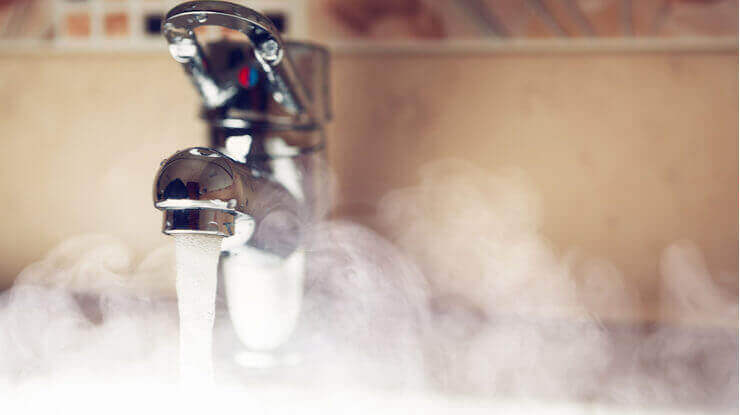
If you are asking, “If my gas is turned off, will I have hot water?”, the answer depends on the type of water heater in your home. A conventional gas storage-tank heater may still supply water that was heated before the gas stopped. However, it cannot heat a new tank of water until the gas supply returns.
A gas tankless water heater usually stops producing hot water almost immediately because it heats water only when you open a faucet. Electric and heat-pump water heaters can normally continue operating because they do not rely on natural gas.
The most important rule is simple: do not attempt to restore gas service, relight an appliance, or repair a gas line unless the appliance instructions and your utility specifically allow you to do so.
If My Gas Is Turned Off, Will I Have Hot Water?
You may still have hot water temporarily if you have a traditional gas water heater with a storage tank. The tank holds dozens of gallons of previously heated water and uses insulation to slow heat loss.
Once the gas is turned off, the burner cannot fire. Therefore, the water already in the tank gradually cools, and any hot water you use is replaced by cold water.
You may notice one of three situations:
- The water initially feels normal.
The tank still contains water heated before the shutdown. - The water becomes warm rather than hot.
Cold water has entered the tank, or the stored water has started cooling. - The water turns completely cold.
The remaining heated water has been used or has lost most of its heat.
A gas shutoff does not always mean that every faucet instantly runs cold. However, it does mean your gas heater cannot produce additional hot water.
Quick Answer by Water-Heater Type
| Water-heater type | Hot water after gas shutoff? | What happens |
| Conventional gas storage tank | Temporarily | Previously heated water remains, but the tank cannot reheat |
| Gas tankless water heater | Usually no | Heating stops when gas service stops |
| Power-vent gas tank | Temporarily | Stored water remains, but the burner cannot reheat it |
| Indirect water heater with storage tank | Temporarily in many systems | The tank may retain hot water, although the gas boiler cannot add more heat |
| Boiler tankless coil | Usually no | It depends on the boiler producing heat |
| Electric storage water heater | Yes | It continues if electricity and water remain available |
| Electric tankless heater | Yes | It continues if sufficient electrical power is available |
| Heat-pump water heater | Yes | It normally operates on electricity |
| Solar water heater | It depends | Results depend on stored heat, sunlight, pumps, and the backup system |
How Long Will the Hot Water Last?
There is no reliable universal answer. Claims such as “one to three hours” can be misleading because hot-water availability depends on much more than time.
The remaining hot water depends on:
- Tank capacity
- Tank insulation
- Starting water temperature
- Household water use
- Shower flow rate
- Incoming cold-water temperature
- Room temperature
- Pipe heat loss
- Recirculation-system operation
- Distance between the heater and the faucet
A large, well-insulated tank with no water use may stay warm for many hours. On the other hand, one long shower can quickly use much of the available hot water because cold water enters the tank as hot water leaves.
Therefore, conserve the stored supply when you expect an extended gas interruption.
How to make the remaining hot water last longer
Take shorter showers, avoid filling a bathtub, postpone laundry, and do not run a dishwasher that depends on household hot water. Use cold water for cleaning whenever practical.
You should also avoid repeatedly opening hot-water faucets merely to test the temperature. Every test removes some heated water and draws cold water into the tank.
What Happens to a Gas Storage Water Heater?
A conventional gas storage heater keeps water in an insulated tank. A burner beneath the tank heats the water, while a thermostat or gas control manages the temperature.
When the gas supply stops:
- The burner cannot ignite.
- The tank stops reheating.
- Stored water gradually loses heat.
- Hot-water use introduces cold replacement water.
- The water eventually becomes lukewarm or cold.
A brief gas interruption generally does not damage a properly functioning water heater. However, a leak, overheating condition, failed control, damaged valve, or appliance that will not shut off requires professional attention.
Do not assume that restoring gas automatically makes the heater safe to use. The reason for the shutoff matters.
What Happens to a Gas Tankless Water Heater?
A tankless water heater does not store a large reserve of hot water. Instead, it detects water flow and heats the water as it passes through the unit.
When the gas is turned off, the burner cannot operate. As a result, the unit normally delivers cold water even if its electronic display and controls still have power.
Most modern gas tankless heaters also require electricity for:
- Electronic ignition
- Control boards
- Flow sensors
- Combustion fans
- Safety systems
- Freeze protection
- Diagnostic displays
- Recirculation pumps, when installed
Consequently, a tankless gas heater may stop working during either a gas interruption or an electrical outage.
Gas Shutoff Versus Power Outage
A gas shutoff and a power outage are different events.
When the gas is shut off, a gas appliance loses its fuel. When electricity fails, the gas may still be available, but the appliance may lose the electrical components it needs to operate.
Will a gas tank heater work during a power outage?
Some conventional atmospheric gas storage heaters can operate without household electricity. These units may use a standing pilot, a thermocouple or thermopile, and self-powered gas controls.
However, many other gas heaters require electricity. These include:
- Power-vent water heaters
- Condensing water heaters
- Electronic-ignition models
- Smart or connected models
- Units with powered dampers
- Systems with circulation pumps
- Some direct-vent appliances
Therefore, the statement “all gas water heaters work during a blackout” is false. At the same time, the claim that almost all modern gas tank heaters require electricity is also too broad.
Check the rating plate and owner’s manual for your exact model. A visible power cord usually indicates that the heater needs electricity, although the absence of a cord does not provide a complete technical diagnosis.
What If You Have an Electric Water Heater?
An electric water heater does not depend on natural gas. Therefore, a gas-service interruption should not affect it as long as:
- Electrical service remains available.
- The circuit breaker has not tripped.
- The water supply remains on.
- The heating elements and thermostat work properly.
An electric storage tank can continue heating water throughout a gas interruption. An electric tankless heater can also operate, although it usually requires a large dedicated electrical supply.
A heat-pump water heater also runs on electricity. However, its performance may depend on operating mode, room temperature, and whether it uses backup resistance elements.
Why Was the Gas Turned Off?
Before thinking about hot-water recovery, determine why the gas stopped.
Common causes include:
- Utility maintenance
- An unpaid or inactive account
- A planned building repair
- A suspected gas leak
- A failed gas control
- An appliance that would not shut off
- Earthquake or storm damage
- Emergency action by the fire department
- A damaged meter or service line
A planned utility interruption creates a different situation from a confirmed leak. If the utility shut off the gas because of a safety problem, do not attempt to restore service or relight the heater yourself.
What to Do If You Smell Gas
Treat a suspected gas leak as an emergency.
Do not:
- Light a match or candle
- Operate a burner
- Relight a pilot
- Turn electrical switches on or off
- Plug in or unplug equipment
- Use a phone inside the building
- Start a vehicle near the leak
- Attempt to find the leak with a flame
Leave the building immediately. Then call the gas utility or emergency services from a safe location.
Do not return until the utility or emergency authority says the building is safe.
Can You Turn the Gas Back On Yourself?
Do not reopen a gas meter or restore utility service yourself after the gas company has shut it off. Utilities generally require their own technician or another authorized qualified professional to restore service, test the system, and relight appliances where appropriate.
An appliance-level control is different from the main utility shutoff. Even so, you should follow the exact manufacturer instructions before operating it.
Water heaters use different ignition systems, including:
- Standing pilots
- Piezoelectric igniters
- Intermittent electronic ignition
- Hot-surface ignition
- Powered combustion systems
- Lockout controls
A generic relighting sequence cannot safely cover every model.
Can You Still Use the Water?
In most cases, you can continue using cold water while the gas is off, provided the household water supply remains active and there is no leak or contamination problem.
You can also use the remaining hot water in a sound storage tank. However, stop using the system and contact a professional when:
- The heater is leaking
- Water is collecting near electrical equipment
- The tank appears damaged
- The temperature-and-pressure relief valve is discharging
- You hear unusual boiling or rumbling
- The water is dangerously hot
- The burner would not shut off
- Gas odor is present
- The utility has prohibited appliance use
What If the Water Heater Is Leaking?
A leak at the bottom of a water heater does not always mean the inner tank has failed. Water can travel downward from several locations, including:
- Cold-water inlet fittings
- Hot-water outlet fittings
- The drain valve
- The temperature-and-pressure relief valve
- The relief discharge pipe
- Condensation
- Venting problems
- Internal tank corrosion
Nevertheless, a leaking inner tank usually requires replacement rather than repair.
If you need to isolate a conventional tank, look for a shutoff valve on the cold-water supply pipe near the heater. Closing a confirmed, functioning cold-inlet valve should stop new water from entering the tank.
Do not identify the cold pipe only by assuming it is on the right or left. Pipe orientation varies. Look for a “COLD” marking, a directional arrow, the owner’s manual, or professional confirmation.
If the valve is missing, broken, seized, leaking through, or impossible to identify, shut off the home’s main water supply and contact a plumber.
How to Drain a Water Heater Safely
Draining a water heater involves hot water, pressure, gas or electricity, sediment, and a large volume of water. Therefore, consult the exact manufacturer instructions before proceeding.
A typical manufacturer-approved process may include:
- Turn off the heater’s energy source.
- Allow the water to cool.
- Close the incoming cold-water valve.
- Attach a secure hose to the drain valve.
- Direct the hose to a suitable drain.
- Open a nearby hot-water faucet to relieve pressure and admit air.
- Open the drain valve carefully.
- Stop if the valve leaks, clogs, or will not operate properly.
Never energize an electric element or fire a gas burner while the tank is empty or only partly filled.
Before restarting the heater, close the drain valve, refill the tank completely, open a hot faucet to purge trapped air, confirm a steady stream of water, check for leaks, and follow the approved gas or electrical restart procedure.
Temporary Ways to Get Hot Water
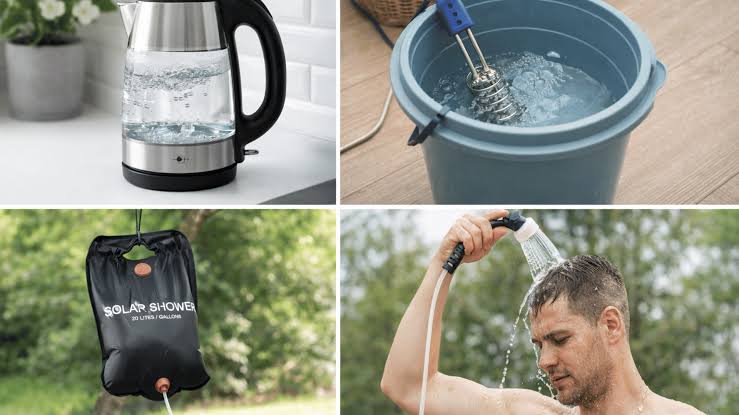
During a short gas interruption, you may heat small amounts of water with an electric kettle or another approved electric appliance.
However, take precautions:
- Keep hot containers away from children.
- Mix heated water with cooler water before washing.
- Test the temperature to avoid scalding.
- Do not carry large open containers of boiling water.
- Do not use an outdoor propane burner indoors.
- Do not use a camping stove in a house, garage, tent, or enclosed space.
- Do not use a gas oven as a room heater.
- Follow all instructions for portable immersion heaters.
- Keep electrical appliances away from bathtubs and sinks.
A temporary electric shower or portable heating device must be properly listed, installed, and used exactly as directed. Improvised systems can cause electrocution, burns, fire, or carbon-monoxide poisoning.
How to Prepare for a Planned Gas Shutoff
When your utility announces a planned interruption, prepare before the gas stops.
Useful steps include:
- Finish showers and hot-water laundry early.
- Charge phones and emergency lights.
- Locate the water-heater manual.
- Identify the heater’s model and ignition type.
- Confirm that carbon-monoxide alarms work.
- Save the utility’s emergency number.
- Avoid unnecessary hot-water use.
- Ask the utility who will relight appliances.
- Never modify gas valves or controls.
- Arrange professional help for elderly or vulnerable household members.
You can also fill clean containers with ordinary potable water for basic washing. Distilled water is not necessary for routine household cleaning.
When to Call a Professional
Contact a licensed plumber, HVAC technician, gas-appliance professional, or your utility when:
- Gas service was shut off because of a leak
- The heater would not stop firing
- The pilot repeatedly goes out
- The burner produces soot or an unusual flame
- The vent is damaged
- The heater leaks
- The gas control appears defective
- You cannot identify the shutoff valve
- The tank will not drain
- The drain valve starts leaking
- The heater shows an error code
- You do not have the model instructions
- You are unsure whether the appliance requires electricity
Gas and water-heater work can involve fire, explosion, carbon monoxide, scalding, flooding, and electrical hazards. When the correct procedure is uncertain, professional service is the safer choice.
Frequently Asked Questions
Possibly. A gas storage tank may contain enough previously heated water for a short shower. However, the available amount depends on tank size, current temperature, prior usage, and shower flow. A gas tankless heater will usually provide no hot water once the gas stops.
Not with a storage-tank heater. The tank retains heated water until you use it or it cools. A tankless gas heater, by comparison, normally stops heating immediately.
Yes, provided the household water supply remains on and the plumbing system is safe. Gas service does not normally control cold-water delivery.
Some do and some do not. Basic atmospheric storage heaters may use a standing pilot and self-powered millivolt controls. Power-vent, condensing, electronic-ignition, smart, and pump-dependent models generally require electricity.
A conventional non-powered atmospheric model may continue working. However, a power-vent, condensing, tankless, or electronically controlled unit will usually stop unless it has an approved backup power source.
Only follow the exact procedure printed on the heater or stated in its current owner’s manual. Do not attempt manual lighting when gas odor is present or when the utility has shut off service.
When the gas utility has shut off service at the meter, the utility or another authorized qualified professional should restore it. Do not reopen the meter valve yourself.
Possible causes include a failed pilot, ignition problem, defective gas control, low gas pressure, closed valve, thermostat fault, burner problem, sediment buildup, or a damaged heater. Contact a qualified technician if basic manual-approved checks do not resolve the issue.
A short interruption normally does not damage a sound heater. However, an existing leak, overheating problem, failed control, freeze condition, dry firing, or incorrect restart can cause serious damage or hazards.
Usually not for a brief interruption. Drain the tank only when the manufacturer recommends it, a repair requires it, or a qualified professional advises it. Draining introduces scalding, flooding, valve-damage, sediment, and restart risks.
Final Answer
So, if my gas is turned off, will I have hot water?
You may have a limited supply if you own a conventional gas storage water heater because the tank retains water that was heated before the shutoff. However, the heater cannot reheat that water until gas service is safely restored.
A gas tankless heater generally stops producing hot water immediately. Electric and heat-pump heaters can continue operating if electrical power and water service remain available.
Do not rely on fixed estimates for how long stored hot water will last. More importantly, never restore gas service, relight an appliance, or repair a suspected gas leak without following the utility’s rules and the exact manufacturer instructions.